If you’ve noticed dark vertical streaks running down your gutters and siding that no amount of ordinary washing seems to remove, you’re looking at one of the most misunderstood problems in exterior cleaning. Those streaks are oxidation — commonly called “tiger stripes” or “zebra stripes” — and they’re the single most common thing homeowners in Sussex County call about after another contractor’s wash didn’t fix them. Here’s what oxidation actually is, why a normal pressure wash can’t remove it, and how it’s properly restored.
What oxidation (tiger striping) actually is
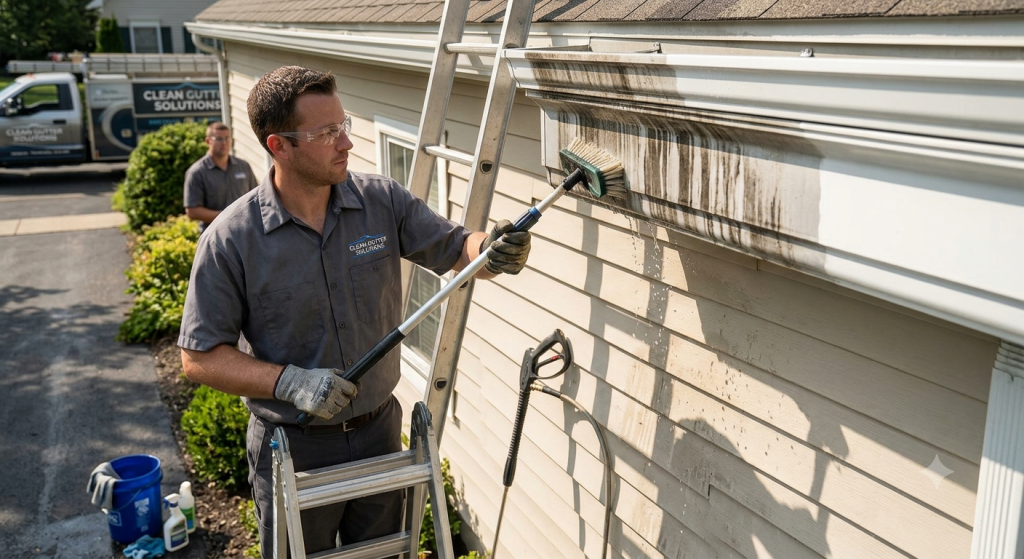
Aluminum gutters and siding have a painted or coated finish. Over years of sun, rain, and coastal air, that finish slowly breaks down at the surface, leaving a chalky, oxidized layer. Rain running off the roof and down the face of the gutter carries and deposits that oxidized residue in vertical streaks — hence the “tiger stripe” pattern. It’s not dirt sitting on top of the surface; it’s the degraded surface itself, which is exactly why it behaves so differently from ordinary grime.
Why regular washing won’t remove it
This is the part that frustrates homeowners. A standard pressure wash — even a strong one — removes dirt, mold, and surface film. But oxidation isn’t surface film; it’s a chemical change baked into the finish. Blasting it with more pressure doesn’t lift it, and can actually damage the coating further while smearing the residue around. Homeowners often pay for a wash, see the stripes still there afterward, and assume the gutters are simply ruined and need replacing. In most cases, they don’t. Removing oxidation takes a specific chemical process, not more water pressure — which is why Hose Bros Inc treats it as a dedicated service rather than part of a routine wash.
How oxidation removal actually works
Proper oxidation removal — sometimes called exterior brightening or gutter brightening — uses a specialized cleaning solution applied at low pressure. The technician applies the product, allows the correct dwell time for it to break down the oxidized layer, agitates the surface where needed, and rinses or wipes away the residue. Done correctly, it restores the gutters and siding close to their original finish without the cost of repainting or replacing. Done incorrectly — wrong product, wrong dwell time, too much pressure — it can streak or damage the coating, which is why it’s a job for someone who has done it many times.
Why coastal Sussex County sees so much of it
Oxidation is driven by UV exposure and weathering, and Sussex County delivers plenty of both. Homes along the coast near Lewes, Rehoboth, and Bethany get intense sun plus salt air; inland homes around Millsboro and Georgetown weather years of humidity and temperature swings. The result is that tiger striping is extremely common on Delaware homes more than a few years old — and because it’s so often misdiagnosed as “dirty” or “ruined,” a lot of homeowners live with it or replace gutters they didn’t need to.
When to address it
If your gutters look dull, chalky, or streaked with vertical dark lines — especially compared to how they looked when installed — that’s oxidation, and it’s worth addressing before it worsens. Beyond appearance, removing the oxidized layer and buildup helps protect the finish underneath. It also makes a dramatic difference in curb appeal, since streaked gutters visually drag down an otherwise clean home. The honest way to know whether your gutters can be restored rather than replaced is an on-site look. Every job at Hose Bros is assessed and quoted by time and materials, so you get a real answer for your specific gutters.
How to tell oxidation from ordinary dirt or mold
It’s easy to lump every gutter stain together, but they behave differently and need different treatment. Ordinary dirt and grime sit on the surface and rinse off with washing. Mold and mildew are biological — they show up as patchy green or black growth, often near downspouts and shaded areas, and a soft-wash solution kills them at the root. Oxidation is the odd one out: it appears as chalky, fairly uniform vertical streaking down the face of the gutter, it won’t rinse off no matter how much pressure you use, and if you run a finger across a badly oxidized surface you’ll often pick up a chalky residue. That chalk is the degraded finish itself. Knowing which of the three you’re dealing with matters, because the fix is different — and only oxidation requires the dedicated brightening process rather than a standard wash.
Can you keep tiger stripes from coming back?
Oxidation is a weathering process, so like any weathering it will slowly return over years as sun and coastal air continue working on the finish — there’s no permanent one-and-done. But it’s very manageable. Once the oxidized layer is removed and the finish restored, keeping the gutters and siding on a regular gentle cleaning schedule slows the buildup and keeps the surface from degrading as quickly. Homes in the harshest exposure — full sun, right on the coast — will see it recur sooner than shaded inland homes, so the right interval depends on your property. The key point is that recurring oxidation is normal and treatable; it doesn’t mean the previous treatment failed, and it certainly doesn’t mean the gutters need replacing. Periodic brightening keeps them looking new for a fraction of the cost of replacement.
What oxidation removal does for your home’s value
Streaked, chalky gutters are one of those details that quietly drag down the look of an entire home — even a house with freshly washed siding reads as “tired” if the gutters are striped. That matters most in two situations. If you’re selling, curb appeal shapes a buyer’s first impression before they’re through the front door, and dingy gutters suggest deferred maintenance whether or not that’s fair. If you own a vacation rental or second home in Sussex County — of which there are many near Lewes, Rehoboth, and Bethany — presentation directly affects bookings and reviews. In both cases, restoring the gutters is a small, high-visibility investment compared to the alternatives people often reach for. Faced with tiger stripes, some homeowners spend thousands repainting or replacing gutters that were structurally fine and just needed the oxidation removed. Brightening restores the appearance at a fraction of that cost and preserves the finish underneath, protecting the gutters you already have rather than replacing them prematurely.
FAQ
What causes tiger stripes on gutters? Oxidation — the slow breakdown of the gutter’s painted finish from sun, rain, and weathering. Rain deposits the oxidized residue in vertical streaks down the face of the gutter, creating the tiger-stripe look.
Why didn’t my last pressure washing remove the streaks? Because oxidation isn’t surface dirt — it’s a chemical change in the finish. Water pressure removes grime but not oxidation. It takes a specialized cleaning solution with proper dwell time to break it down.
Do I need to replace oxidized gutters? Usually not. In most cases oxidation can be removed and the finish restored without repainting or replacing. An on-site assessment will tell you whether restoration is realistic for your gutters.
Where to next: see pressure washing cost in Sussex County, or learn how Hose Bros handles exterior brightening and oxidation removal.
Published July 2026 · Hose Bros Inc · Serving Millsboro & Sussex County, DE