A lot of Sussex County homeowners are told their roof is beyond saving — that the dark streaks and staining mean it’s time for a costly replacement. In many cases, that’s simply not true. Those black streaks are usually a living organism, not structural damage, and a proper soft-wash roof cleaning can rejuvenate the roof and buy years of additional life. Here’s what’s really happening up there and when cleaning is the smarter first move.
What the black streaks actually are
The dark streaking you see on so many roofs is a hardy blue-green algae called Gloeocapsa magma, often alongside moss and lichen in shaded areas. It feeds on the limestone filler in asphalt shingles and spreads across the surface, leaving the streaked, stained appearance people mistake for rot or wear. It’s cosmetic in its early stages, but left unchecked it holds moisture against the shingles and can shorten roof life — which is the real reason to deal with it, beyond curb appeal.
Why “ruined” is often a misdiagnosis
When a roofer or a homeowner sees heavy black streaking, the instinct is to assume the shingles are failing. But staining and failure are different things. A shingle roof with plenty of service life left can look terrible simply because algae has taken over the surface. Cleaning that algae off frequently reveals a roof that’s structurally fine and has years left in it. That’s why a second opinion focused on cleaning rather than replacing is worth getting before you commit to a five-figure roof job. When a stained roof looks beyond saving, Hose Bros Inc can often soft-wash and rejuvenate it instead.
Why you must never pressure wash a roof
Here’s the critical part: the method matters enormously. High-pressure washing a roof strips the protective granules off asphalt shingles, forces water underneath them, and can void shingle warranties — turning a cosmetic problem into real damage. That’s exactly the outcome people fear, and it comes from using the wrong technique. Roofs must be soft-washed: low pressure plus a cleaning solution that kills the algae, moss, and lichen at the root and rinses gently, with no granule loss and no water forced under the shingles. Because the growth is killed rather than knocked loose, a soft-washed roof stays clean far longer than one that’s been blasted.
Why coastal Delaware roofs grow so much algae
Sussex County’s humidity, tree cover, and coastal air create close to ideal conditions for roof algae and moss, especially on north-facing and shaded slopes that stay damp longer. Homes near the water and under heavy canopy show the heaviest streaking. That’s why roof staining is so widespread here — and why so many homeowners are told they need a new roof when a soft wash would restore the one they have.
When cleaning is the right call — and when it isn’t
Soft-wash rejuvenation is the right first move when the streaking is algae and the shingles are otherwise sound. It’s not a fix for a roof that’s genuinely at the end of its life, has widespread cracked or missing shingles, or is actively leaking — those are roofer problems, and cleaning won’t change them. The honest way to know which situation you’re in is an on-site look before anyone commits to replacement. Every roof is assessed by Hose Bros on-site, with a time-and-materials quote for the cleaning.
The soft-wash roof cleaning process, step by step
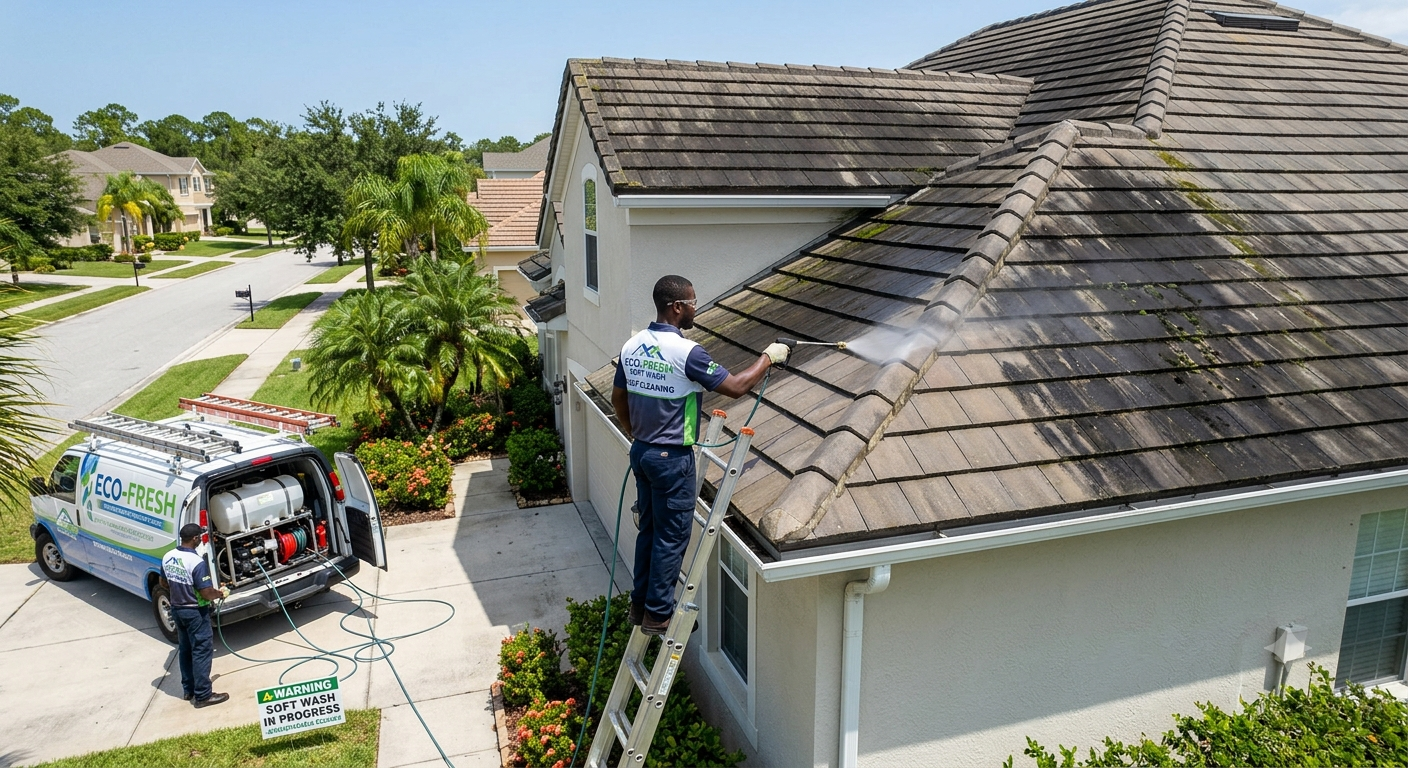
A safe roof cleaning follows a careful sequence. It starts with an inspection — confirming the shingles are sound, identifying the algae, moss, or lichen present, and checking the slopes that need the most attention. Landscaping around the house and the gutters is protected, since the cleaning solution runs off during the process. The technician then applies a low-pressure cleaning solution across the roof and lets it dwell, giving it time to kill the algae and moss at the root rather than just loosening the surface. There’s no scrubbing and no high-pressure blasting — the chemistry does the work, not force. The roof is then rinsed gently, or in some approaches allowed to weather clean. One thing that surprises homeowners: the full result often appears over the following days as the dead algae dries and washes away with rain, so a roof can keep improving after the crew has left.
Getting more life out of your roof after cleaning
Cleaning buys time, and a few habits extend that further. Keeping gutters clear prevents water from backing up and holding moisture against the roof edge. Trimming branches that overhang the roof reduces the shade and dropped debris that let algae and moss thrive, especially on north-facing slopes. Addressing moss early — before it thickens and lifts shingles — keeps a small problem small. And putting the roof on a periodic soft-wash schedule, rather than waiting until it’s heavily streaked again, keeps the algae from ever regaining a foothold. In Sussex County’s humid, coastal climate, that kind of light maintenance is what turns a roof cleaning from a one-time rescue into years of extended roof life, often deferring a costly replacement well down the road.
Why cleaning beats replacing — the cost case
The financial gap between cleaning and replacing a roof is enormous, which is what makes the “your roof is ruined” misdiagnosis so costly. A full roof replacement is typically a five-figure job, while a soft-wash cleaning is a small fraction of that. When the only real problem is algae staining on shingles that still have years of service life, replacing the roof means spending many times more than necessary — and sending a perfectly serviceable roof to the landfill. There’s an environmental angle there too: extending the life of what you have is simply less wasteful than tearing off and disposing of sound materials. None of this means replacement is never the answer; a roof that’s genuinely worn out, widely damaged, or leaking needs a roofer, and cleaning won’t change that. The point is sequencing: get an honest, cleaning-focused assessment first, so you only pay for a replacement when you actually need one — not because staining made a healthy roof look worse than it is. For a lot of Sussex County homeowners, that assessment is the difference between a modest cleaning bill and an unnecessary five-figure project. It’s worth getting that look before you sign a replacement contract, not after — once the old roof is torn off, there’s no undoing it, and you may have paid to replace shingles that only needed a wash.
FAQ
Are the black streaks on my roof permanent damage? Usually not — they’re typically algae (Gloeocapsa magma), not structural damage. Soft-wash cleaning removes the algae and often reveals a roof with years of life left.
Will cleaning my roof damage the shingles? Not if it’s soft-washed. Low pressure plus a cleaning solution is safe. The damage risk comes from high-pressure washing, which strips granules and can void warranties — and is never used on shingles.
How long does a soft-washed roof stay clean? Because soft washing kills the algae at the root instead of knocking it loose, results typically last far longer than a pressure rinse — often years, depending on shade and humidity.
Where to next: see pressure washing cost in Sussex County, or learn about Hose Bros roof washing.
Published July 2026 · Hose Bros Inc · Serving Millsboro & Sussex County, DE